
March 30, 2026

When we wrote about the Big Beautiful Bill last year, it had only just been signed into law. Now, with a July 1 launch fast approaching, students and families are bracing for major changes to federal student loan programs.
For credit unions, this is an opportunity to step up for their current members—and countless new and potential members—as they navigate paying for school, refinancing and beyond. It’s also a chance to originate billions in new, safe loans.
A Recap of What’s Changing
The Big Beautiful Bill doesn’t just tweak the federal funding program; it tears it apart. Almost two-thirds of students report they will be impacted by the new law, with most saying they don’t fully understand the changes. When you consider familial financial support too, the likelihood is that every credit union in the country will have affected members; folks in genuine need of guidance and non-predatory financing to achieve their educational goals.
Some of the key challenges credit union members will face include:
Grad PLUS loans eliminated for new borrowers
Previously, graduate students could borrow up to the full cost of attendance with no cap. From July 1, however, graduate unsubsidized loans are capped at $20,500 per year with a $100,000 lifetime limit. For professional students in medicine, law and dentistry, the ceiling is higher ($50,000 per year and $200,000 lifetime) but that still falls short of the full cost of attendance for many programs, meaning millions of students are likely to face significant funding gaps.
Parent PLUS loans will be capped at $20,000 per year per student with a $65,000 lifetime cap
Previously, families could borrow up to the full cost of attendance, minus other financial aid. Now, families already stretching to cover tuition costs could face difficult decisions about which schools and degrees they can afford for their children.
The SAVE repayment plan will be eliminated
This repayment plan that tied monthly payments to as little as 5% of discretionary income is set to be replaced with a new Repayment Assistance Plan (RAP) whose terms are less favorable for many borrowers. This will likely translate into higher monthly payments and more interest paid over the life of the loan, and many borrowers (especially those who were holding out for total student loan forgiveness) are expected to turn to refinancing to improve their repayment situation.
A Generational Shift in the Lending Landscape
Speaking on a recent 22 Minutes in Lending episode, Sallie Mae executive, John Volpini, positioned the coming changes as the most significant shift in almost a generation.
“This ranks right behind when the government pushed the lenders out of the private federal state loan space [in 2010]. That was such a significant change, it pivoted the entire industry,” Volpini said.
The Private Market Set to Absorb Billions in Loans
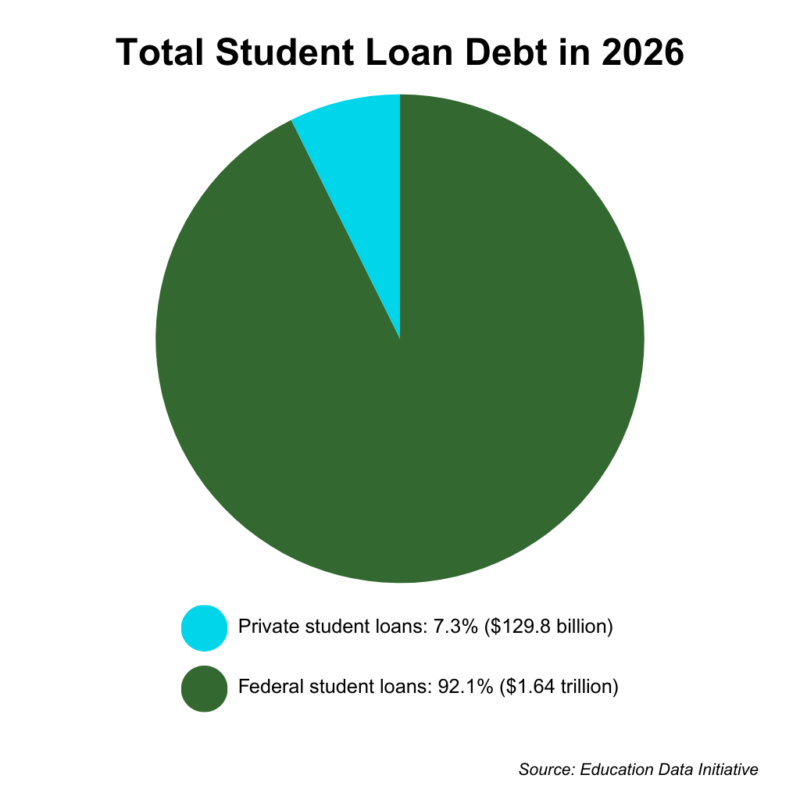
While the bill is broadly seen as a negative for borrowers, there is in fact significant upside. Volpini, who works directly with schools and financial institutions in his role, was bullish about the private market’s ability to absorb the $10 billion lending gap the federal reductions will create. “The private market will easily absorb the money from the government this year. We know that, we’ve looked at it.”
Critically, however, Volpini noted that private lending would be a bonus for borrowers, too, saying that “most consumers will get a better deal from the private market.”
So if major lenders have the capacity and infrastructure to take on billions in new loan originations and refinancing, the question for credit unions is whether they have the appetite to grow with the demand.
The Credit Union Difference Can Make the Difference
Even though members who secure a student loan through their credit union are more likely to return for additional financial products, credit unions have historically been more conservative in the education lending space. This has seen traditional banks (including Sallie Mae) dominate the market … But the market breaks wide open on July 1, 2026.
The Big Beautiful Bill is market disruption realized, and millions of people are seeking partners rather than straightforward lenders to help them navigate the uncertainty. This presents untold growth for credit unions looking to double-down on their differentiators: genuine relationships with members, community-grounded and community-minded, and competitive financial solutions developed to place people before profit.
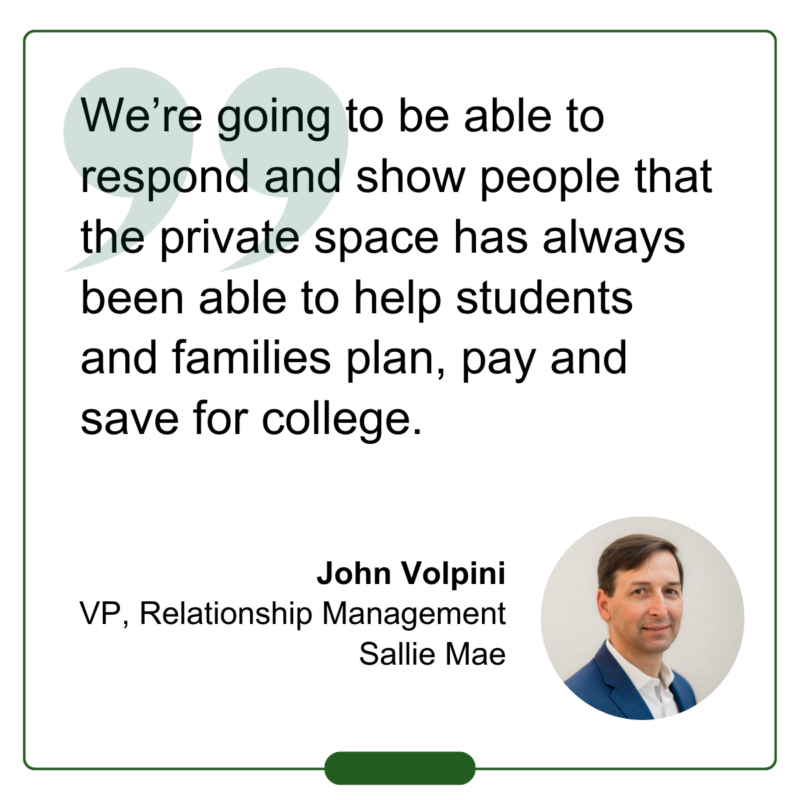
“I know that the private space will step up, and I think you’re going to see some great things happen,” says Volpini. “We’re going to be able to respond and show people that the private space has always been able to help students and families plan, pay and save for college. And I think this is just a great opportunity for many lenders to really think about how they want to connect with students and families.”
What Credit Unions Should Be Doing Right Now
- Launch or expand private student loan and refinancing programs before July 1 – LendKey can help you streamline the entire process.
- Educate your branch staff and member-facing teams now. Members will have questions and you want to have the answers.
- Proactively identify your at-risk members (such as those with Parent PLUS or Grad PLUS loans) and reach out before they turn to another lender to refinance.
- Lean into your mission. Many borrowers, especially graduate and professional students, will need to use the private market for the first time, and credit unions are positioned to offer them better options than banks or fintechs, along with much-needed guidance and support.
To discuss your credit union’s loan growth goals and student lending potential, contact LendKey today.